Born Different. Here's How I Learned to Learn.
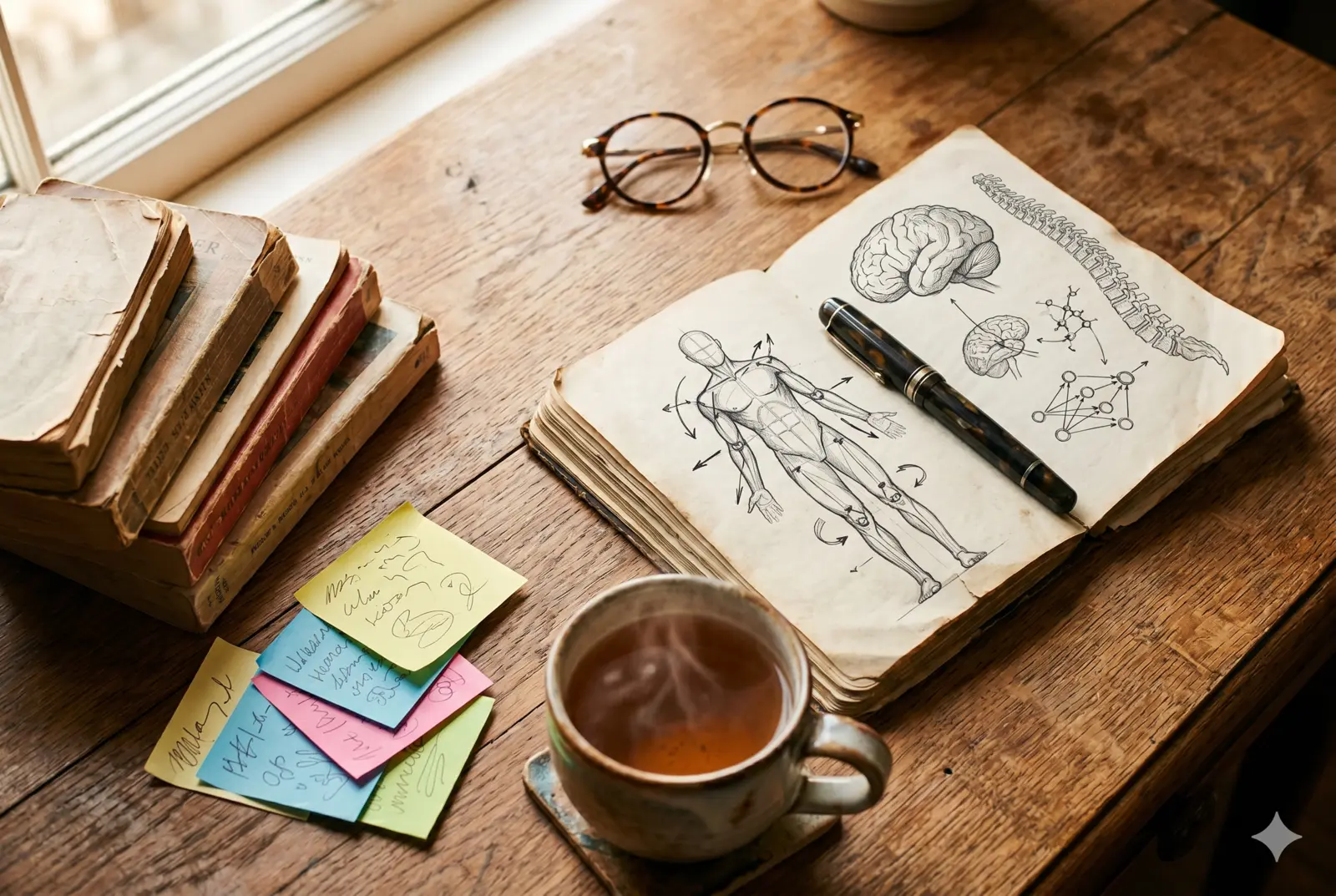
Funny thing first. When I finally got the ADHD diagnosis I went round to my friends, “Hey guys, look, I got ADHD”, and showed them the report. They just looked at me puzzled. “Hoi, we all knew, we thought you knew?”. I was like… er what?! I never even knew what ADHD was until then. lol. Talk about lack of self-awareness (and I’m the one always preaching this). Some friends I have, right? They all thought I knew and never said a word, yet they all knew or thought it anyway. haha. Could’ve saved me £900 for the assessment! But oh well. At least I know now. Not that it changes anything.
My entire life, I’ve struggled with learning. Until I learned how to learn, probably only about 10-11 years ago, into my early 30s.
My biggest struggle was languages. I probably had undiagnosed dyslexia, ADHD which is 100% diagnosed last year aged 42 (attention deficit hyperactivity disorder), and OCD (obsessive compulsive disorder). Even now I still get letters in the wrong order. So if anything in here reads a little sideways, you know why.
Back in the 1980s, I don’t think neurodiversity was much of a thing teachers were aware of, unless you showed extreme external tell-tale signs. Mine were more subtle, more internal, plus my own suppression of it to blend in. So it went undiagnosed for 42 years. But I always felt different, like I was born different to everyone else. For too long I tried to be normal. It took me ages to love who I am. Now? I love being different. Being normal is boring, and it’s not Hoi lol. All that energy, drive, optimism, stubbornness and never giving up is another superpower, and it’s what draws people to me. Pros and cons, constantly fighting internally for balance.
School Was Just Memorise and Forget
School was boring. After 10-15 minutes of focus my mind would drift off. From primary school to college it was the same on repeat: regurgitate a textbook, memorise as much as you can, no meaning, no application, no understanding of why it mattered in real life.
University was different. Groups, assignments with actual goals, a dissertation on something you chose. Too late by then though. All I thought about was partying, drinking, and girls lol. A whole new distraction.
I didn’t do too bad academically, I got through it. The real problem: how do I apply all that memorised stuff to the real world? School never taught finance, wealth building, or admin. Luckily, or unluckily, I was the one helping my parents read letters, translate, and handle the family admin from a very young age. That helped a little, but it was still a struggle.
Three Years of Book Stuffing
There were challenges that forced me to change, probably a whole blog on its own, so I’ll leave it there. When I started my own business at 23, the struggle was real. With a goal in front of me, I tried to learn the same old school way: read lots of books, memorise what I can, then apply it. Check out my other blog on the 127 books I read over those years.
I went through a lot of books. And I can tell you, probably the most ineffective way to learn.
At 26, three years into the book stuffing, someone told me: “Hoi, you need to learn to learn.” I didn’t understand what they meant. It stuck in my head though, sat there for years, until it finally hit me at 33. The proper “ah-ha” moment.
That curiosity opened everything up. I started reading about psychology, how the mind and memory work, how to memorise and keep it, mindset, building the right learning environment for you. Because everyone is different. That one shift accelerated my learning way beyond regurgitating.
How I Remember Everyone’s Name
So I started to experiment. First question: how to remember everyone’s name in a room, no limit?
My favourite trick is building a weird, funny storyboard in my head, tying someone’s name to how they look. So if you ever see me giggling to myself at a party, don’t get too offended lol. I also use fruits or animals for personalities, or pin someone to a friend with the same name. Easy, and it adds a twist of creativity to a one-word description.
It works to a certain extent. I remember names a lot better now. The only problem is I know too many people, so unless I see them often it’s still a struggle. You know the trick we all do. You introduce a friend to an acquaintance whose name you’ve completely forgotten, so you introduce the friend whose name you definitely know, then wait for the acquaintance to jump in. I get caught with my pants down all the time, where they turn round and go “you forgot my name didn’t you?”. Oops. I think my friend over there is waving me over! Am I that obvious? Hm. Gotta work on that one.
Other things that help. A physical action, a touch, typing, writing it down, pushes something from short-term into long-term memory. Note-taking is a good backup when I forget, and if you juggle a million things, updating your issues or tickets is a must. I always have a notebook or my phone on me. People love it when you remember their name, especially the second time. Instant rapport. Even better if you remember what you chatted about, or their hobbies. That’s how I have so many friends. Blogging is one reason I work on my memory, which is why I write a lot.
Attach an Emotion to It
Here’s the one that tricks the mind into keeping something forever: emotional attachment.
Attach an emotion to your work, your learning, a subject. Turn a hobby into a passion. It focuses the topic, keeps it engaging, fires up the body and brain. Have you noticed how easily you remember moments of hate, love, pain, or joy? Same principle. Emotional memory is a real thing. Finding the passion keeps my ADHD in check, flipping me from an easily distracted mess into hyper-focus.
I also use fear to choose what to learn next. I can’t swim well, but it doesn’t stop me doing scuba diving, sailing, windsurfing. I’m afraid of heights and suffer from vertigo, but I boulder and do lead and rope climbing. I was afraid of the touch of people (seriously), so I learned to dance, having to embrace a partner in open or close hold. Does the fear go away forever? Nope, never. Embrace it rather than letting it stop you learning something that could spark the next passion. Fear keeps you from harm, but it can also block learning and growth. It’s a choice. It doesn’t mean you’ve conquered it. It may get less over time, but it’s always part of who you are. Let it run its course, then continue once it subsides. These emotions are a great catalyst for learning, so use them!
Learn Like a Child
Have you ever wondered why children learn so fast? Several reasons. And several reasons that can also stunt their mental and emotional growth.
Young children are fearless. They only learn fear through pain, or from what the adults around them feed them. They learn fast because they’re empty vessels, an empty glass. Most adults walk in with the glass half full, and top it up instead of keeping it empty. They pollute one subject with another, assuming it’s related. Approach it like a child. Stay curious, keep things separate, stop assuming what you know is right or wrong. Keep an open mind, there’s always more than one way depending on the situation. Just play, explore, take risks. Children are highly observant. They copy, try, fail, adjust, and keep going until they get it. They don’t think failing is bad, unless it’s been forced into them.
By the time we’re adults, we’ve been taught failing is bad. So we fail once, twice, three times, and give up. It’s only bad if you don’t adjust, even the tiniest bit. Trauma stunts growth too, children and adults alike. Getting past that, like being afraid to fail or try something new, unlocks learning. So learn to play again. Forget what others say, change a little each time, and observe.
Active Learning, Not Going Through the Motions
Active learning versus passive or autonomous. Active learning is active listening, active anything. Passive is when you just do it and try not to think too much.
I spent years learning to dance and made this exact mistake early on. Regurgitating from books is the same as passive learning. Just cramming knowledge into the body. It’s ineffective, probably only useful for know-it-alls who can’t handle a real situation or apply what they “know”. You know the type. Talk the talk, can’t walk the walk.
In my dance blogs I go on about active learning. Train the body consciously, not subconsciously until it goes autonomous. Worst way to learn to dance. You can’t adapt to the music, constantly off beat, moving for the sake of moving. That isn’t dancing! Active dancing is hearing the music change, microseconds of forecasting ahead, in tune with your partner, aware of your surroundings, dancing on time, adapting to the layers it takes you on, co-creating together. That’s dance. No autonomous shortcut. We wire our brains by training the basics 10,000 times for every movement.
What Bruce Lee said: “do not fear the man who practice 10,000 different moves once, but fear the man who practices one punch 10,000 times”. Or something like that. I’d add to it though. It means exploring that one movement 10,000 times, in as many different ways as you can. Otherwise it’s just autonomous learning again, and now you’ve got bad habits to undo. This is the difference between copying and actually understanding the what, when, why, and how of applying it. Learn the workflow, the feedback loops, stay aware, keep adjusting. Whatever you’re learning should be a piece you actually need for what you’re building.
I should avoid the AI talk in this blog, but I’ll mention it briefly. I believe once AI have learned to learn active learning, then they’re probably on the level of becoming sentient.
Having a Goal
Whatever you’re learning, there must be a reason. Where you want to be, a project goal or a personal one. You need a goal so you can create a plan, then use it to figure out the pieces and workflow to get there. A deadline helps push it through. Most importantly, break it down and work out what you need to learn for each piece. Whether it’s 5 basic movements in dance or building your own computer. Then learn each piece, assemble them, play around, and observe the what, when, why, and how.
Forgetting Is a Feature
Don’t cram unnecessary information. Your brain’s capacity takes time, better spent on what you want. Learn what you need, toss the rest. Forgetting isn’t a problem, it’s a feature for brain efficiency.
A Little Every Day
Exploration matters. The other big one is consistency. Once in a full moon won’t cut it. It’s a long, slow journey, so do a little bit, regularly. Take dancing. It’s physically, emotionally, and mentally demanding, practise each consistently. Or watch a learning video, 10 minutes of an audiobook, a few pages. A day. Every day.
Keep It Simple, Stupid
Keep it simple, stupid. What does that actually mean? Stick to the foundations and basic building blocks. Stop chasing the fancy, over-engineered material that looks cool and is probably impractical. It’s the old “learn to walk before you run”, except most people seem to want to fly lol.
And stop believing the influencers and YouTubers selling you “master it in 5 days”. Very likely not gurus at all. They’re selling hot air, probably no strong foundation themselves. True mastery often looks like something simple, done really well.
Be the Dumbest Person in the Room
Here’s a good one. Try to be the dumbest person in the room. In a class, at school, on a team, in a company, it doesn’t matter. If you’re one of the smartest people there, that’s your signal it’s time to move on, because you’ve stopped growing. That includes the friends you hang out with regularly. Stay hungry. Surround yourself with people smarter than you, the ones who make you work to keep up. That’s how you keep levelling up instead of coasting at the top.
You’re Sculpting a Future You
“Aim to be a tiny bit better today than yesterday.” That was from a book I read and it’s stuck with me ever since. Learning is you being a sculptor, slowly carving a future version of yourself. You chip away a little at a time. Chip too fast or hard and you break too much off. Then it’s either still salvageable, or worse, you’ve shattered it.
Long-term memory apparently happens while you sleep. But it’s during the day, how you use and apply it, that tells the body and brain what to build, like adding bandwidth or wiring a direct connection to a cluster of brain cells. I ain’t no brain expert, but I think it’s something like that.
It’s Never Too Late to Start
If you’ve felt stupid, or been stagnant, or learning the wrong way, you can always change. It’s a choice. The pursuit of knowledge can stop and start again whenever you want. Don’t compare yourself with others, it’s not a race, everyone has different circumstances. Learning should be fun (haha, unless you’re like me where the lessons can be painful), if not, what’s the fucking point? The whole point of this blog is figuring out how learning works for you. Work out what does and doesn’t, but the fact you’re on this page means you’re trying. And hey, I’m always looking for new ways too!
The Dumbest Excuse Ever
Plenty of people compliment my dancing, especially in Brazilian Zouk, and ask how I learned so well. My answer is always the same: tons of classes and practising a lot, nearly every day. Then they go, “I wish I could dance like you.” And I say, yeah, anyone can, if they went through the same journey. So I ask, what’s stopping you? Here comes the lamest excuse ever… “I can’t dance, I have two left feet”. Omg, the cringiest excuse ever. I always respond, er yeah… that’s why we go to class, to learn and train so we don’t have two left feet. How do you think we all started? We didn’t start with talent. Talent is nurtured. We started by going to classes and kept training for donkey years.
The fact people think they should only start something if they show some talent is the dumbest thing I ever heard. That logic makes no sense! It happens so often I think it’s something in the culture, or self-consciousness. Your idea that you need talent to learn something? No. Sorry, but change that mindset immediately! Saying that is probably the biggest insult, you’ve just walked all over the blood and sweat talented people went through to achieve what they’ve achieved!
The Short Version
That ended up longer than I hoped! So here are the bits worth keeping:
- Memorising without applying is the slowest way to learn. Real learning is understanding the what, when, why and how.
- Tie a physical action and an emotion to what you want to remember. Touch it, write it down, feel something. Emotional memory makes things stick.
- For names, build a weird little story and link it to a face. Fruits and animals for personalities work well.
- Use fear as a compass. What scares you is often what’s worth learning. The fear never fully goes, you just stop letting it block you.
- Learn like a child. Empty glass, fearless, curious, stop assuming one thing is like another. Play, try, fail, adjust.
- Active beats autonomous. Going through the motions builds bad habits to undo. Train the basics 10,000 times, explore that one thing 10,000 ways.
- Have a goal first. It gives you a plan, and the plan tells you which pieces to learn. A deadline helps push it through.
- Don’t cram what you don’t need. Forgetting is a brain feature, not always a problem unless you have Alzheimer’s.
- Consistency beats intensity. A little every day, not a lot once in a full moon.
- Keep it simple, stupid. Foundations first. Ignore anyone promising mastery in 5 days.
- It’s never too late to start. Learning isn’t a race. Don’t compare your path to anyone else’s.
- Talent is nurtured, not a prerequisite. “I have two left feet” isn’t a reason, it’s the reason to go to class. Nobody started good.
- Be the dumbest in the room, including your regular circle. If you’re the smartest, you’ve stopped growing, time to move on. Stay hungry.
- You are sculpting a future you. Chip a little at a time. Too fast and you shatter it.
Anyway, those are some of my thoughts on getting past my own learning difficulties. Stop memorising everything, get curious about how your mind works, and go play.
Thanks for reading.
Hoi