Why major cities struggle to grow the Brazilian Zouk dance community.
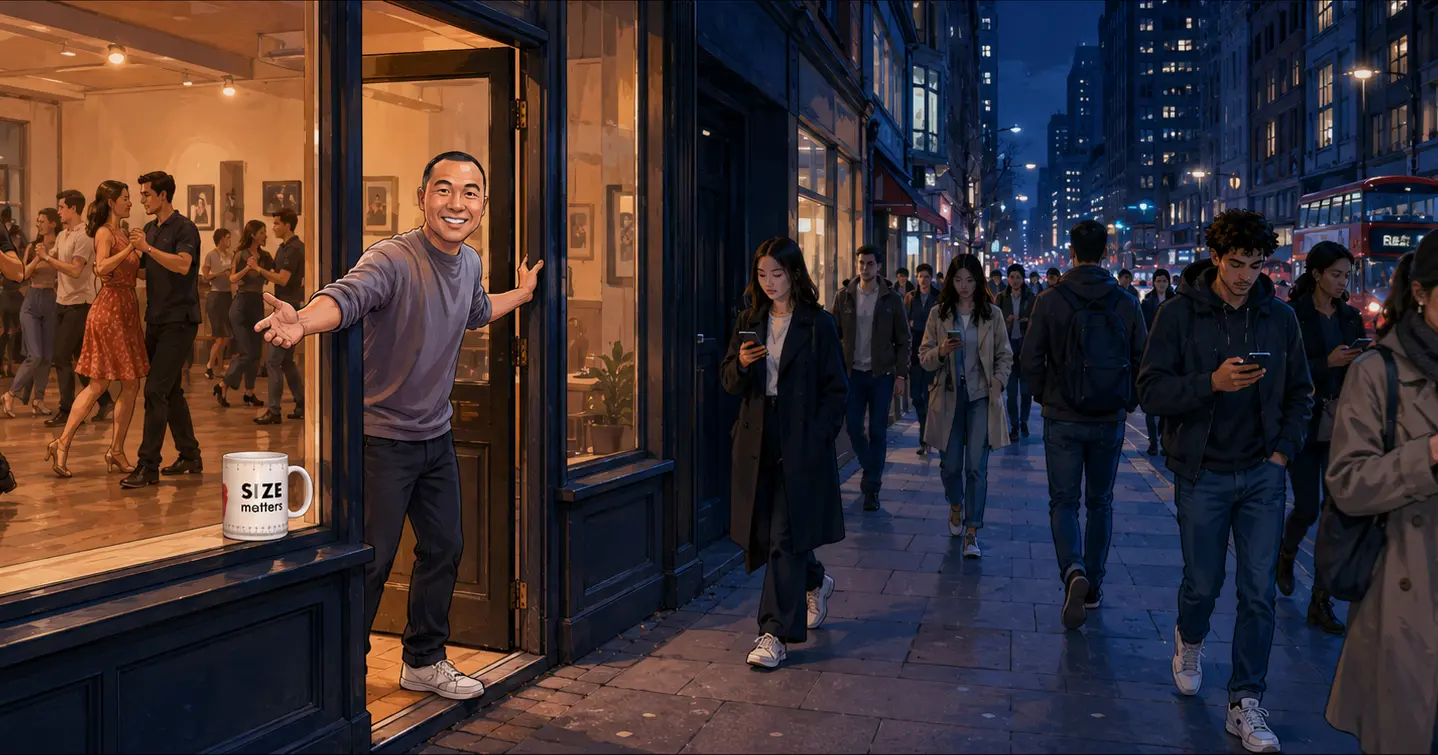
Unfortunately, Brazilian Zouk is the hardest fucking dance in the world to learn.
It is not one of those dances you pick up in a few weeks. Or a few years. The learning curve is steep as hell.
But here is the good part. Once you get a proper grasp of it, once you understand how it actually works, it becomes a form of expression and a language of its own. That feeling is unmatchable. Pure bliss and joy.
And that same steep learning curve could be the doom of this dance if nothing is done about it.
By the time we master it, we are grey and old. The younger generations are not discovering it, or they are discovering it way way too late in their lives.
So this is one of my predictions. If the community leaders in the cities do not do something about it, Brazilian Zouk is going to die out one day, purely because of that learning curvature.
I am always looking at things under a lens and asking the same question. Can this be done better?
The community is fragmented
One of the problems is the fragmented community. Old leaders fighting the new, and the new fighting the old.
Common problem. Change always brings friction, and people do not like change because it is uncomfortable.
So some teachers do their own thing. Some do work together. But there is no union and no agreed direction on how to make it all work together and grow the pie larger. Instead everyone is nibbling on their own little pie to feed themselves only, and biting back the second somebody tries to touch it.
This is probably one of the biggest problems that will kill a dance community. Or any kind of community, really. (I wrote about the mechanics of this years ago in The Clockworks of a Dance Scene. Reading it back, not a lot has changed.)
The business model is not working either
The turnover is barely breakeven compared to the number of dancers who stay no more than a couple of years.
It is a dying model. And the reason is not complicated. Dancers are not reaching the level they need to be at, so they hit a plateau in their progression and they leave. I named that failure state years ago in Understanding Dance Growth, Plateaux and Bad Habits, and it is still the thing quietly draining every city scene.
You cannot run a healthy business on a two-year churn. You cannot run a healthy community on one either.
Nobody is talking to the 18 to 30s
Most people who start Brazilian Zouk start way too late. Thirties and up.
And as I said, it can take 5 to 10 years to even get good at it. Do that maths and you can see where this ends.
There currently is not a marketing plan or a strategy for how to target 18 to 30 year olds. What most local community leaders, and the global ones too, do not think about is this. The youngsters are the future. We should be supporting and promoting dance from a younger age.
If there is not a steady stream of 18 to 30 year olds starting to learn Brazilian Zouk, then there will not be anyone left to run our communities and continue the legacies that we have built.
And we cannot dumb it down any further
So there is a scaling problem caused by the steep learning curve, and it looks like the number one problem to me.
But we cannot dumb it down any more than it already is, because you lose the essence of this beautiful dance. That is not a trade I am willing to make, and I do not think you should either.
Which means the fix has to come from somewhere else.
Now the good thing is… I am back
I am back for good, after taking a few years break from everything in life that consumed a lot of my energy before!
Hoi the critic, and a mastermind of building global Brazilian Zouk community. Back in the building.
So instead of focusing on the international global dance scene, I am going to put my skills, experience and knowledge to good use and invest in the local communities instead (not just London), and change our direction away from doom. So for clarity, I plan to help every city in the world, but with a local growth strategy business plan.
I have already started building the business model and the strategy, with a clear blueprint that tackles and reverses the effects of each of the problems I have highlighted above. And we will do much much more than that. You will find that we unite the dance community, the builders of our community, the teachers, and the students, and keep growing what I would call a healthy community.
This time round, I have partnered with Billy in London on this project. We will lead this initiative together and dogfood our own idea, building the MVP (minimum viable platform, the smallest working version of a thing you can put in front of real people to find out whether it holds up) and prototyping our concepts of teaching, coaching and mentoring, to help develop dancers at a much more rapid rate and give them a far more enjoyable time doing it.
And instead of targeting current Brazilian Zouk dancers, we are going to focus on the 18 to 30s, so we can funnel them into our community and guide them to learn from all the different established dance schools currently out there.
Business minded and community minded, both
To make this work we need to be both business minded and community minded. It will not work if it is one or the other.
A poor community cannot have nice things, like a decent place to dance. You cannot unite and grow a community with selfishness, only caring about yourself and what you can gain from it.
A community cannot survive without money. A community cannot grow without people. And the future cannot be handed to the next generation without younger people.
I know how all of this works because building for others had always been in my nature growing up, long before I ever joined the dance community. I built our dance business and the biggest global Brazilian Zouk online community to where it was by thinking, planning and executing carefully, with clear objectives and goals. (I wrote most of that playbook down already, if you want the long version: How to Actually Build Communities.)
The good, the bad, and the uglies
Unfortunately, building communities has its ugly side too.
The good, the bad, and the uglies. I have learned to embrace it all, and I do not need to be friends with everyone. I just make alliances with those who want change, who want better than what it is now.
Working with the right people only. And fuck em if some do not want to work together because they think you are stealing their customers, or because they think they own their customers like properties and have the right to it all, and are critical without ever trying to do something bigger and better other than think about themselves.
And yes, I can be loud about it. I am just not afraid to call a shovel a shovel. (If you have read the London rant from back in the day, you already know exactly how loud.)
But ultimately, it is the act put into action that will change our Brazilian Zouk dance community’s future, so we are no longer heading towards extinction.
One step at a time
The unique business model is one we plan to integrate with the Bachata community too, and any other dance community in the future.
But one step at a time!
We got this. You have 2 entrepreneurial minds working on this, and we have already started reaching out to get support from all the top dancers and other community builders in London to get them onboard.
This will be a game changer for partner dance communities in every city in the world who wants to build or revive their dying dance community.
We got this. Keep your eye out for big updates soon!
This is the Way